

While economic headwinds continue to challenge traditional retail, South African e-commerce is experiencing explosive growth that savvy entrepreneurs cannot afford to ignore. Online sales are projected to reach R150 billion by the end of 2025, with the e-commerce sector growing at an impressive annualized rate of 38% in 2025—far outpacing physical retail's modest 3% growth[1]. By 2026, the market is expected to hit R225 billion, creating unprecedented opportunities for those ready to launch the best profitable online business ideas South Africa 2026 has to offer.
The hardest part of starting an e-commerce business isn't building the website—modern platforms make that surprisingly straightforward. The real challenge is deciding what to sell. With giants like Shein and Temu flooding the market with ultra-cheap imports, South African entrepreneurs need to compete on value, uniqueness, and local relevance rather than just price.
This comprehensive guide presents 10 high-potential niches specifically curated for the South African market. From eco-friendly local goods and artisanal food products to smart home energy solutions and digital services, these opportunities allow entrepreneurs to build sustainable businesses that serve real local needs. Each idea leverages South Africa's unique market conditions, consumer preferences, and growing digital infrastructure.
Ready to transform your entrepreneurial dreams into reality? Pick an idea that resonates with your passion and skills, and take the first step today toward building your profitable online business.

Before diving into specific business ideas, understanding the current market dynamics is crucial for success. South Africa's digital economy has matured significantly, with e-commerce now capturing approximately 10% of total retail sales nationwide[1]. This percentage continues to climb as internet penetration improves and consumer trust in online shopping strengthens.
The long-term outlook remains exceptionally promising. The market is expected to grow at a CAGR of 9.7% from 2026 to 2032, reaching USD 18.6 billion by 2032[3]. This sustained growth trajectory indicates that entrepreneurs entering the market today are positioning themselves for years of expansion rather than a temporary trend.
Geographic concentration plays a significant role in market dynamics. Gauteng Province accounts for 63% of South Africa's e-commerce transactions, valued at USD 3.8 billion annually[3]. However, expansion to smaller towns and provinces is accelerating as connectivity improves and logistics networks expand, creating opportunities for businesses serving underserved markets.
WooCommerce leads with 59.62% of store count, followed by Shopify at 20.99%[2]. This distribution suggests these platforms offer the most accessible and profitable infrastructure for new entrants, combining ease of use with powerful features. Interestingly, while Custom Cart generates the highest sales volume ($54.39B, 59.74% of total), WooCommerce and Shopify remain critical for reaching diverse customer bases[2].
The mobile revolution cannot be overstated. Mobile devices account for 76% of all online purchases, with mobile e-commerce transactions growing by 42% between 2022-2024[3]. Mobile wallet usage increased by 58% since 2023, with transaction values reaching USD 4.3 billion in 2024[3]. Any business idea must prioritize mobile-first design and seamless mobile payment integration.
Now let's explore the ten most promising e-commerce opportunities specifically tailored for the South African market. Each idea includes market rationale, startup considerations, and competitive advantages.
Market Opportunity: South African consumers are increasingly environmentally conscious, creating demand for sustainable alternatives to everyday products. This niche allows you to compete on values and quality rather than price.
Product Examples:
Why It Works: This category builds customer loyalty through shared values. Customers willing to pay premium prices for sustainable products tend to be repeat buyers with higher lifetime value. The storytelling aspect—showcasing local artisans and environmental impact—creates emotional connections that giants like Temu cannot replicate.
Startup Tip: Partner with local manufacturers and artisans to create exclusive products. Highlight the South African origin and environmental credentials prominently in your marketing.
Market Opportunity: Load shedding has transformed energy independence from a luxury to a necessity. This creates sustained demand for solar solutions, backup power, and energy-efficient devices. Marketing opportunities.
Product Examples:
Why It Works: The Consumer Electronics category generates $53.08B in estimated sales (58.29% of total platform sales)[2], making it the strongest performing sector. Energy solutions represent a specific, high-value subset with consistent demand driven by infrastructure challenges.
Startup Tip: Offer comprehensive buying guides, installation support, and financing options. Create comparison tools to help customers calculate ROI on energy investments.
Market Opportunity: The Apparel & Fashion category is the second-largest with $20.90B in sales (22.96% of total)[2]. African-inspired fashion allows you to tap into this massive market while differentiating through cultural authenticity.
Product Examples:
Why It Works: Africa's creative economy is experiencing rapid growth, with the fashion and design sector showing particular promise[6]. Consumers worldwide seek authentic African designs, creating both local and international market opportunities. This niche competes on uniqueness and cultural value rather than price.
Startup Tip: Collaborate with local designers and showcase their stories. Offer customization options and limited-edition collections to create urgency and exclusivity.
Market Opportunity: South Africa's diverse culinary heritage and growing foodie culture create opportunities for specialty food e-commerce, from artisanal products to curated gift boxes.
Product Examples:
Why It Works: Food products encourage repeat purchases and subscription models. Local specialties cannot be easily replicated by international competitors, providing natural protection against price competition. Gift hampers create seasonal sales spikes and corporate bulk order opportunities.
Startup Tip: Obtain necessary food handling certifications early. Build subscription box options for recurring revenue and partner with local producers to ensure authentic, high-quality products.
Market Opportunity: Digital products offer exceptional profit margins with zero inventory costs, making them ideal for bootstrapped entrepreneurs exploring the best profitable online business ideas South Africa 2026 offers.
Product Examples:
Why It Works: Once created, digital products can be sold infinitely without additional production costs. The growing demand for skills development and remote work capabilities creates sustained market demand. South African expertise in specific areas (tourism, mining, agriculture) creates opportunities for specialized content.
Startup Tip: Start with one exceptional product rather than many mediocre ones. Build an email list early and leverage content marketing to establish authority in your niche.
Market Opportunity: The wellness industry continues expanding as consumers prioritize self-care and natural health solutions. This category offers strong margins and repeat purchase potential.
Product Examples:
Why It Works: Beauty and wellness products create loyal customer bases with high lifetime value. South Africa's unique botanicals (rooibos, marula, buchu) provide authentic differentiation. The category spans multiple price points, allowing you to target different customer segments.
Startup Tip: Ensure compliance with health product regulations. Invest in quality product photography and detailed ingredient information to build trust. Consider influencer partnerships for credibility.
Market Opportunity: Consumers increasingly value unique, handmade products with authentic stories, creating opportunities for curated marketplaces or specialized artisan brands.
Product Examples:
Why It Works: Handcrafted goods compete on uniqueness and craftsmanship rather than price. Each piece tells a story, creating emotional connections with buyers. Supporting local artisans resonates with socially-conscious consumers and creates marketing narratives that mass-produced goods cannot match.
Startup Tip: Build relationships with multiple artisans to ensure consistent inventory. Photograph products in lifestyle settings and share artisan stories to create emotional connections with customers.
Market Opportunity: The Autos & Vehicles category generates $4.79B in sales (5.26% of total)[2], indicating a viable niche with less competition than electronics or fashion.
Product Examples:
Why It Works: Car owners need regular maintenance supplies and upgrades, creating repeat purchase opportunities. South Africa's car culture and challenging road conditions drive consistent demand. Technical expertise creates barriers to entry that protect margins.
Startup Tip: Focus on a specific vehicle segment (luxury, off-road, classic cars) to build expertise. Provide detailed fitment guides and installation videos to reduce customer uncertainty.
Market Opportunity: Western Cape Province's tourism-driven digital commerce grew 58% between 2022-2024, generating approximately $780 million in revenue, with digital booking platforms growing by 42%[3].
Product Examples:
Why It Works: Tourism remains a cornerstone of South Africa's economy. Digital booking platforms capture growing consumer preference for online planning and instant confirmation. Commission-based models require minimal upfront inventory investment.
Startup Tip: Start with a specific region or experience type to build depth before expanding. Partner with quality providers and focus on exceptional customer service to generate positive reviews.
Market Opportunity: Parents and educators constantly seek quality educational materials, creating year-round demand with predictable seasonal spikes.
Product Examples:
Why It Works: Education spending remains a priority for South African families regardless of economic conditions. Curriculum alignment creates switching costs (parents return to trusted resources). Bulk ordering from schools provides high-value B2B opportunities alongside B2C sales.
Startup Tip: Ensure materials align with the South African curriculum. Build relationships with teachers and homeschooling communities for word-of-mouth marketing. Offer bundle deals for complete grade-level packages.
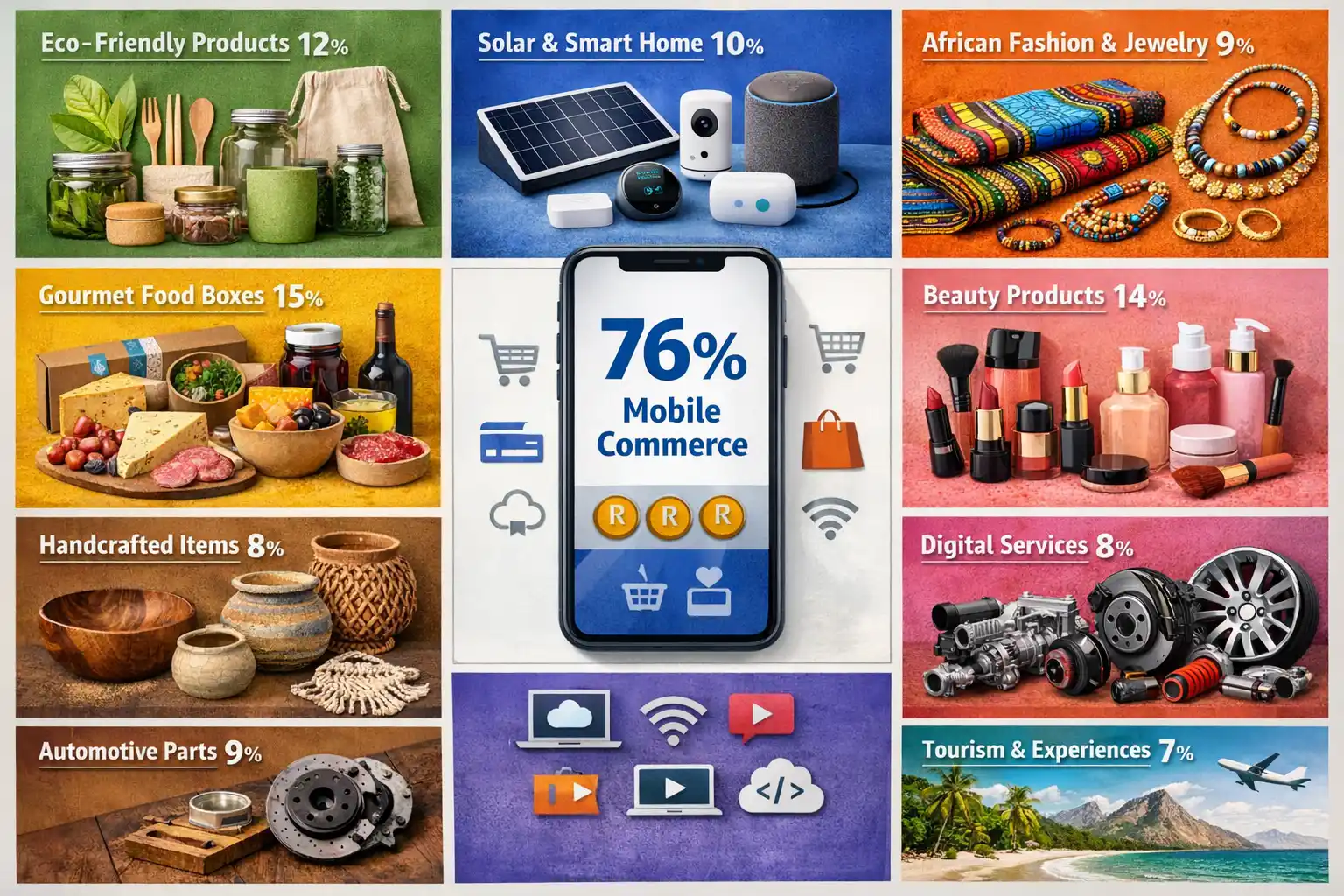
With these best profitable online business ideas South Africa 2026 presents, how do you choose the right one? Consider these critical factors:
Choose a niche you understand or are willing to learn deeply. Your enthusiasm will sustain you through inevitable challenges, and your expertise will differentiate your business from competitors who view it merely as a transaction.
Validate demand before investing heavily. Use tools like Google Trends, social media listening, and marketplace research to confirm people are actively searching for and buying products in your chosen category. Balance high demand against competition levels—sometimes a smaller niche with less competition offers better profit potential than a crowded market.
| Business Idea | Startup Capital | Inventory Needs | Time to Profit |
|---|---|---|---|
| Digital Products | Low (R6,000-R20,000) | None | Fast (1-3 months) |
| Handcrafted Goods | Medium (R20,000-R50,000) | Moderate | Medium (3-6 months) |
| Automotive Parts | High (R30,000+) | High | Slower (6-12 months) |
| Tourism Platform | Low-Medium (R10,000-R40,000) | None | Medium (3-6 months) |
Choose a model that matches your available capital and risk tolerance.
Different business models require vastly different initial investments:
Consider long-term growth potential. Digital products and platform-based businesses scale more easily than inventory-heavy models. However, physical products often command higher prices and create stronger customer loyalty.
Once you've selected your niche from these best profitable online business ideas South Africa 2026 offers, follow these essential steps:
Validate your idea thoroughly before investing significant resources. Survey potential customers, analyze competitor offerings, and identify gaps in the market. Understanding your target customer's pain points, preferences, and purchasing behavior is crucial.
Document your strategy, financial projections, and operational plans. Even a simple one-page business plan forces you to think through critical questions: Who are your customers? How will you reach them? What are your costs and pricing? How will you handle fulfillment?
Complete legal requirements including business registration, tax registration with SARS, and any industry-specific licenses. Proper structure protects your personal assets and establishes credibility with suppliers and customers.
Given that WooCommerce leads with 59.62% of store count and Shopify at 20.99%[2], these platforms offer proven reliability for South African entrepreneurs. Consider:
Prioritize mobile optimization since 76% of all online purchases happen on mobile devices[3].
Build relationships with reliable suppliers or develop your own products. Negotiate favorable terms, order samples to verify quality, and establish clear agreements regarding pricing, minimum orders, and delivery times.
Integrate multiple payment options to maximize conversion rates. Mobile wallet usage increased by 58% since 2023[3], making solutions like SnapScan, Zapper, and mobile banking essential alongside traditional card payments.
Partner with reliable courier services and clearly communicate shipping costs and delivery times. Consider offering free shipping thresholds to increase average order values.
Build a multi-channel marketing approach:
Start selling and gather customer feedback immediately. Don't wait for perfection—launch with a minimum viable product and improve based on real customer interactions. Monitor analytics, test different approaches, and continuously optimize your store's performance.
"The best time to start was yesterday. The second best time is today. South Africa's e-commerce boom won't wait for perfect conditions—it rewards those who take action now."

Entrepreneurs pursuing the best profitable online business ideas South Africa 2026 offers will face predictable challenges. Here's how to address them:
Solution: Start with low-inventory models like dropshipping, digital products, or made-to-order items. Bootstrap by reinvesting early profits rather than taking on debt. Consider crowdfunding or small business grants available through organizations like SEDA.
Solution: Partner with established courier services rather than building your own logistics network. Start with major metro areas where delivery is most reliable, then expand as you grow. Set realistic delivery expectations and over-communicate with customers about order status.
Solution: Compete on value, not price. Emphasize local relevance, faster delivery, better customer service, and unique products that cannot be easily sourced internationally. Build a brand story that resonates with South African values and experiences.
Solution: Invest in professional website design, clear policies, and excellent customer service. Display security badges, customer reviews, and money-back guarantees prominently. Start with a strong social media presence to build community before driving significant traffic to your store.
Solution: Start with one or two channels and master them before expanding. Invest in learning through free resources, online courses, or hiring freelancers for specific tasks. Join entrepreneur communities to learn from others' experiences.
South Africa's e-commerce landscape in 2026 presents extraordinary opportunities for entrepreneurs willing to take action. With the market growing at 38% annually and projected to reach R225 billion[1], the question isn't whether e-commerce offers profitable opportunities—it's which of these best profitable online business ideas South Africa 2026 presents will you pursue?
Success in e-commerce doesn't require revolutionary ideas or massive capital. It requires identifying a genuine market need, offering real value to customers, and executing consistently. The ten business ideas presented here, from eco-friendly products and smart energy solutions to African fashion and digital services—provide proven pathways to profitability in the South African market.
Your next steps are clear:
The entrepreneurs who will dominate South Africa's e-commerce future are taking action today. They're not waiting for perfect conditions, unlimited capital, or complete certainty. They're starting with what they have, learning as they go, and building sustainable businesses that serve real customer needs.
The R225 billion question is simple: Will you be one of them?
Choose your idea, take the first step, and join South Africa's e-commerce revolution. Your profitable online business journey starts now.
[1] Lula.co.za — E-Commerce in South Africa
[2] AfterShip — eCommerce Statistics South Africa
[3] South Africa Ecommerce Market -
[4] Verified Market Research — South Africa eCommerce Market
[5] Africa E Commerce Market -
[6] The Rise Of Africas Creative Economy -
Ready to turn one of these ideas into a reality? Don't let technical costs hold you back. View our affordable E-commerce Shop Price packages and launch your professional online store today.

