
Last updated: October 19, 2026
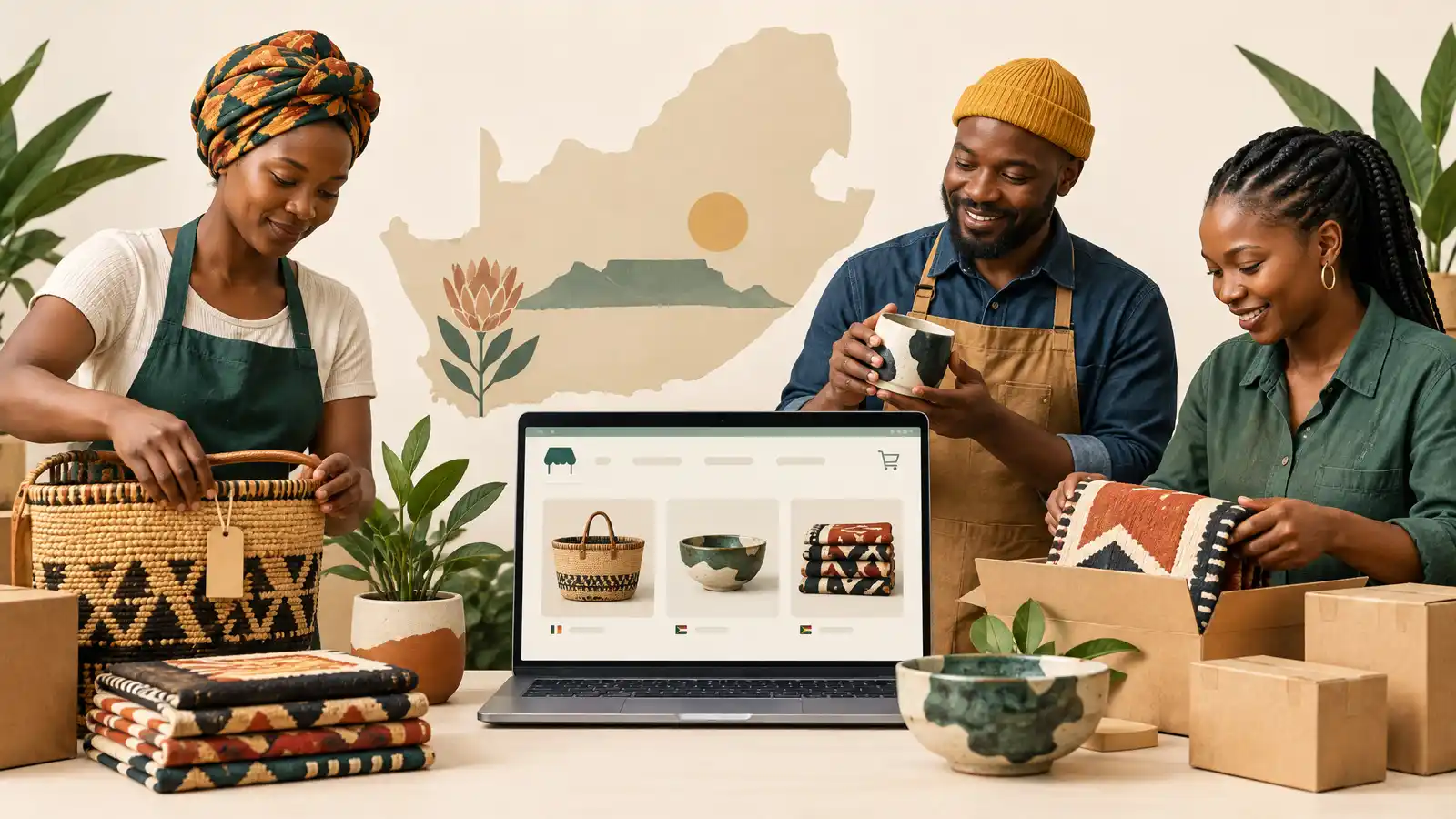
The fastest, lowest-risk way to learn how to start a small multivendor marketplace in South Africa is to pick one niche, cap vendors at 20 to 30 or fewer, and build on WordPress with a WooCommerce marketplace plugin rather than custom software. Charge a flat commission on sales instead of subscriptions, keep vendors responsible for their own courier arrangements, and register as a business before processing real payments. This approach matches how most successful local seller marketplaces in South Africa actually launch: small, focused, and manually managed in year one.
A multivendor marketplace is a single website where multiple independent sellers list and sell products, while the platform owner earns a commission on each sale. The admin controls product approval, payment collection, and dispute rules, while vendors manage their own stock and fulfillment.
In a small local seller marketplace in South Africa, this usually means one WordPress site, one shared checkout, and a dashboard where each vendor uploads products and sees their own orders. The admin never touches inventory directly.
For a first-time founder, prioritize a low-cost setup with simple commission options, such as a flat fee or percentage per sale.
If sellers need different shipping arrangements, look for a marketplace setup that can manage shipping by vendor.
If you serve sellers across multiple language communities, choose a setup with flexible language support and commission rules.
Start with the simplest affordable option if you aim to launch within eight weeks. If you expect to grow beyond 20 vendors in the first year, choose a setup that can scale without requiring a complete rebuild.
Free plugin tiers cover single commission rates and basic vendor stores; paid tiers unlock per-vendor shipping, subscription vendor fees, and advanced payout scheduling.
| Feature | Free Tier | Paid Tier |
|---|---|---|
| Vendor storefronts | Yes | Yes |
| Flat commission | Yes | Yes |
| Tiered/product-level commission | No | Yes |
| Automated payout scheduling | Limited | Yes |
| Priority support | No | Yes |
Common mistake: buying the paid tier before testing demand with 5 vendors on the free version.
A lean micro marketplace for 20 vendors or fewer typically costs between R15,000 and R60,000 to build, depending on design customization and whether you hire a developer.
Skip custom app development at this stage. It adds cost without adding vendors. Start your Marketplace
Yes. Operating a marketplace that collects payments and takes commission requires registering a business entity, typically a private company (Pty Ltd), and opening a business bank account before going live with real transactions. The nest would be to start trading in your own name this will save time and money to test the concept without overspending.
Regulators are also tightening rules around e-commerce platforms, including potential joint liability for issues caused by third-party sellers on the platform [7]. This makes formal registration and clear vendor agreements non-negotiable, not optional paperwork. The Competition Commission's Online Intermediation Platforms Guidance Note also sets expectations for fair treatment of smaller sellers on any platform, including small local marketplaces [9].
Vendor payouts should run on a simple schedule: admin collects full payment at checkout, deducts commission, then pays vendors their net amount weekly or bi-weekly via EFT or a payment gateway's split-payment feature.
Edge case: if a vendor disputes their payout amount, always show them the order-level commission breakdown, not just the total.
PayFast, Yoco, and Peach Payments are commonly used gateways that integrate directly with WooCommerce and support South African card and EFT payments [8].
Choose PayFast if you want the simplest WooCommerce plugin integration. Choose Peach Payments if you anticipate needing split payments to vendors directly from the gateway as you scale past 20 sellers.
The marketplace owner must register for tax on commission income, and VAT registration becomes mandatory once turnover exceeds the SARS threshold (currently R1 million per year).
Vendors remain responsible for their own tax on sales proceeds; the marketplace is not responsible for vendor tax filings unless explicitly agreed in the vendor contract. Keep commission invoices for every transaction to simplify year-end accounting.
Recruit vendors through niche-specific channels: local maker Facebook groups, craft markets, township business associations, and SME support programmes running in 2026 that specifically help entrepreneurs enter e-commerce [also referenced in general industry guidance].
Onboarding checklist for a micro marketplace:
Common mistake: approving every applicant to hit a vendor count target. Quality control matters more than vendor volume in a niche marketplace for local makers in South Africa.
Choose a multivendor marketplace if you want to bring different sellers together and earn a commission from their sales. Choose a single-seller store if you want to sell your own products and avoid managing other sellers’ stock or customer issues.
A small marketplace with up to 20 sellers may suit you if you’re comfortable helping resolve problems between buyers and sellers. A single-seller store may suit you better if you want full control over your products and brand.
Set a written dispute policy before launch: buyer contacts admin within 48 hours of delivery, vendor has 72 hours to respond, and admin holds final say on refunds funded from the vendor's next payout.
Edge case: if a courier loses a parcel, require vendors to have proof-of-dispatch tracking before approving any refund from marketplace funds.
The most frequent mistake is overbuilding the tech stack before validating demand with a handful of real vendors and real sales.
Market a micro marketplace through the vendors themselves: each seller promotes their own storefront link to their existing audience, multiplying reach without separate ad spend.
A lean niche marketplace for 20 vendors or fewer typically launches in 6 to 10 weeks when using WooCommerce plugins instead of custom development.
Starting a niche multivendor marketplace in South Africa works best as a deliberately small project, not a scaled-down version of a big platform. Capping vendors at 20 or fewer, using WooCommerce marketplace plugins instead of custom code, and earning through straightforward commission on sales gives first-time founders a realistic path to revenue without an engineering budget. South Africa's online retail sector is growing fast, with spend forecast near R159 billion in 2026, and shoppers already favor local platforms, which creates real room for focused niche marketplaces [1][2][3].
Next steps: pick one niche category, shortlist five to ten potential vendors before inviting any real sellers onboard. Test the products see how they rate on reviews on Google.
What is the minimum number of vendors needed to launch?
There is no fixed minimum; many niche marketplaces launch with 10 to 15 vendors and grow toward 20 before adding more.
Can I run a marketplace without a registered business?
Best is to consult an expert. Collecting commission on sales requires a registered business entity and a business bank account in South Africa.
Is WooCommerce good enough for a real marketplace?
Yes, for 20 - 50 vendors or even more is fine and will with a marketplace plugin handles vendor dashboards, commission splits, and checkout without custom development.
Who pays for courier shipping, the vendor or the marketplace?
In most small marketplace setups, the vendor arranges and pays for their own courier, keeping the admin's responsibility limited to order tracking.
What commission rate is typical for a small South African marketplace?
Commission rates commonly range from 8% to 20% per sale, depending on the niche and vendor margins.
Do vendors need their own VAT registration?
Vendors handle their own tax obligations, including VAT registration if their individual turnover crosses the SARS threshold.
How do I pick a niche for a local maker marketplace?
Pick a category with an active local maker community already selling at markets or on social media, since existing demand reduces launch risk.
Ready to start your own multivendor marketplace? Take inspiration from global platforms like Etsy and Amazon, and South African marketplaces like Takealot and Bob Shop. Choose a niche, bring together your first sellers, and take the first step toward building a marketplace of your own. Contact us
[1] Sa Online Retail To Reach R159 Billion In 2026
[2] A Whopping R159bn To Be Spent In 2026 As Online Retail Crosses 10 Threshold
[3] South African Online Shoppers Prefer Local To Temu Shein
[4] Online Shopping Is Booming In South Africa
[6] South Africa's Ecommerce Market Is Growing Fast But The Real Story Is In The Detail
[7] Regulators Move To Fix Loopholes In E-commerce Sector
Tags: multivendor marketplace South Africa, WooCommerce marketplace, local seller marketplace, niche marketplace for makers, vendor onboarding, marketplace commission model, South African ecommerce, small business ecommerce, payment gateways South Africa, courier integration, WordPress marketplace plugins, startup ecommerce guide

